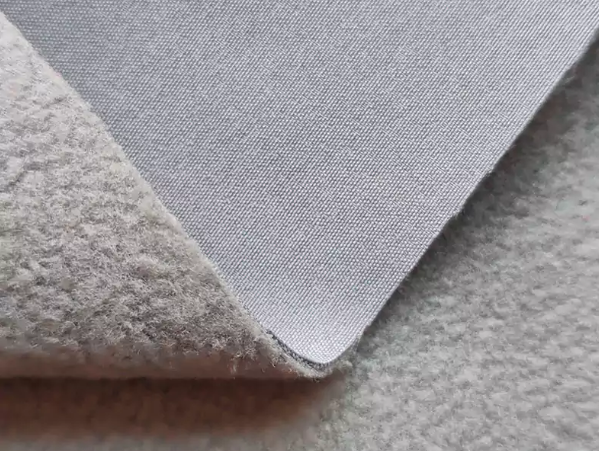
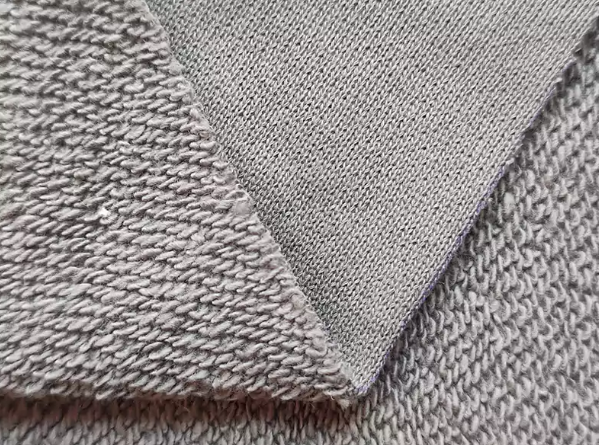
What is Polyester Fleece?Polyester fleece is a synthetic fabric made from 100% polyester fiber. This fabric is soft and lightweight but has heat-providing properties. Therefore, it is particularly suitable for coldweather. Polyester fleece fabric is popular not only in the clothing industry but also in outdoor wear, sportswear, and even home decor. The main reason for its popularity is its durability. Polyester fleece fabric is excellent for use in cold weather and popular for everyday use due to its durability, softness, and easy care properties.<stron...
Fill out the form below, and our team will get back to you with a personalized quote.
Factory-Direct Wholesale Pricing
Weekly Production Updates
Low MOQ for Custom Orders
Free 3D Mockups & Design Support
Premium Performance Fabrics
Replacement Policy For Defects
Polyester fleece is a synthetic fabric made from 100% polyester fiber. This fabric is soft and lightweight but has heat-providing properties. Therefore, it is particularly suitable for cold
weather. Polyester fleece fabric is popular not only in the clothing industry but also in outdoor wear, sportswear, and even home decor. The main reason for its popularity is its durability. Polyester fleece fabric is excellent for use in cold weather and popular for everyday use due to its durability, softness, and easy care properties.
Polyester fleece feels comfortable, especially due to its lightweight nature. Whether you’re wearing a hoodie or a tracksuit, this fabric provides warmth and doesn’t feel heavy. A special feature of polyester fleece is that it traps body heat but does not overheat due to its breathability. This is why this fabric is also ideal for hiking, camping, and other outdoor activities. This fabric dries sweat quickly and helps keep the body cool. Which makes it ideal for outdoor activities. Polyester fleece is more durable than other natural fabrics. This fabric retains its shape and softness even after repeated washing. Making it usable for a long time. This fabric is excellent for people with sensitive skin because it is free of allergy-causing bacteria. This fabric retains its color even after washing. While some other fabrics may fade and lose some color and quality during washing.
• Polyester fleece was invented in 1979 at a company called Malden Mills.
• This fabric was originally developed as a substitute for synthetic wool.
• Polyester fleece is made from petrochemicals, which are derived from oil and natural gas.
• Its purpose was to create a fabric that was warm, soft, and lightweight, and more durable and easy to care for than traditional wool.
• Polyester fleece quickly gained popularity due to its warmth and softness, especially in outerwear and sportswear.
• It became famous for its ability to provide warmth in cold weather.
• Over time, the polyester fleece manufacturing process has improved.
• Now it is available in various weights, textures, and properties.
• The trend of making polyester fleece from recycled plastic bottles is also increasing, which makes it an environmentally friendly option.
• Today, polyester fleece is used in a wide range of clothing, including hoodies, sweatshirts, tracksuits, jackets, shorts, trousers, women’s crop tops, and more.
• It is popular due to its warmth, softness, durability, and ease of care.
• With the advancement of technology, moisture-wicking, wind-protecting, and other properties have been added to polyester fleece.
Polyester fleece fabric is cheaper than wool and cotton. Yet, it is in no way inferior in providing warmth and comfort. Wool-like fabrics can be difficult to care for because they are at risk of shrinking or deteriorating. While polyester fleece can be easily washed and requires less maintenance. It dries faster than natural fabrics. Therefore, it is the best fabric for use in rain or humid weather. Woolen clothes are heavy. While polyester fleece is lightweight and feels comfortable even when worn for long periods.
Although polyester fleece is soft. But it cannot replace the warmth and softness of natural fabrics like wool. Traditional polyester fleece is made using petroleum-based chemicals. Which can negatively affect our surrounding environment. This fabric is more likely to generate static electricity. Which causes the cloth to stick quickly. Using this fabric in hot weather can be uncomfortable due to sweat and excessive heat.
1- Washing Rules:
• This fleece should always be washed in cold or lukewarm water.
• Too hot water can damage the fabric’s structure. Avoid detergents with harsh chemicals.
• Mild, fragrant detergents give the best results. It is better to dry the fleece in natural air.
• If using a machine dryer, keep the setting on low heat.
• Use a very light speed when ironing. Because too much heat can melt or damage the fabric.
• After that, store the clothes in a dry and cool place so that the fabric does not get damaged by moisture and retains its shape.
Pilling is a process in which the fibers of the fabric get tangled and form small pellets or “fuzz balls,” which are commonly seen on the surface of the fabric. It mostly occurs in areas where there is more friction, such as sleeves, collars, edges of pockets, or where the fabric bends more.
Yes, polyester fleece is likely to pill, but it completely depends on the quality of the fabric and its use. High-quality polyester fleece, such as anti-pill fleece, has less or no pilling because it undergoes special processing and finishing. Low-quality polyester fleece or cheaper grades of polyester are more likely to pill, especially if they have a soft texture and are subject to more friction.
1. Low-Quality Polyester Fibers: If the fleece uses short, weak, and non-durable fibers, they can easily break and cause pilling.
2. High Friction: Where the fabric rubs together more, such as on elbows, knees, or side parts, pilling is more likely. Sleeping in clothes can also cause friction.
3. Machine Washing and Vigorous Washing: Washing polyester fleece too vigorously, washing it in very hot water, or placing it on a high-speed spin cycle can weaken the fibers, which can increase pilling.
4. Washing with Other Clothes: If polyester fleece is washed with cotton or other rough fabrics, their fibers can get attached to the fleece, which increases the chances of pilling.
5. Heat and High Temperature: Excessive use of a heat dryer or iron can weaken the polyester fibers, which leads to more pilling.
6. Low-Quality Final Finishing: Some cheap polyester fleeces do not have anti-pill treatment, which can cause more pilling over time.
• Choose Anti-Pill Fleece
Always choose high-quality polyester fleece that has been anti-pilling processed.
• Wash Clothes Properly
Wash in cold water and use a gentle cycle.
Avoid harsh detergents, use only mild or soft detergents.
Inside-out wash is better when machine washing.
• Low Spin and Natural Dry
Avoid high-speed spin and dry naturally in the air.
Do not use a high heat dryer, as it can damage the fibers.
• Use Lint Roller or Anti-Pill Shaver
If pilling occurs, use a lint roller, fabric shaver, or gently razor to reshape the fabric.
• Avoid Washing with Rough Clothes
Do not wash polyester fleece with denim, towels, or other hard fabrics to reduce friction.
China is the largest producer of 100% polyester fleece fabric in the world. And it is also known for its advanced technology and cheap labor service. The United States is particularly specialized in the production of recycled polyester fleece fabric. And it holds an important position worldwide regarding the use of environmentally friendly materials. Polyester fleece fabric is produced on a large scale in India. Due to which it is an important part of the textile industry. Taiwan is very popular for producing high-quality polyester fleece fabric. It is distinguished in the global market due to its excellent quality.
GSM (Grams per Square Meter) is a unit used to measure the density of fabric. It tells us how many grams a one-square-meter piece of fabric weighs. GSM helps in estimating a fabric’s thickness, warmth, and durability.
• Fabric Thickness and Weight: Higher GSM means the fabric is thicker and heavier.
• Warmth: Fabrics with higher GSM are generally warmer due to having more fibers.
• Durability: Higher GSM fabrics are typically more durable and last longer.
• Usage: The GSM of a fabric helps determine its intended use. For example:
Lightweight fleece with low GSM is suitable for mild weather.
Heavyweight fleece with high GSM is ideal for colder climates.
• Lightweight (180–240 GSM): Thin and light fleece
• Midweight (240–340 GSM): Warm and durable fleece
• Heavyweight (340+ GSM): Thick and extra warm fleece; suitable for cold weather
garments like hoodies, sweatshirts, tracksuits, jackets, shorts, trousers, and women’s crop tops.
• Choosing the right GSM is crucial. If you want warm and durable clothing, go for high GSM fleece. If you prefer lightweight and breathable garments, choose low GSM fleece.
• GSM is not the only measure of fabric quality. Texture, fiber type, and other factors also affect performance.
• Understanding GSM is essential for brands and fabric lovers to select the right fabric based on their needs and to deliver high-quality products to customers.
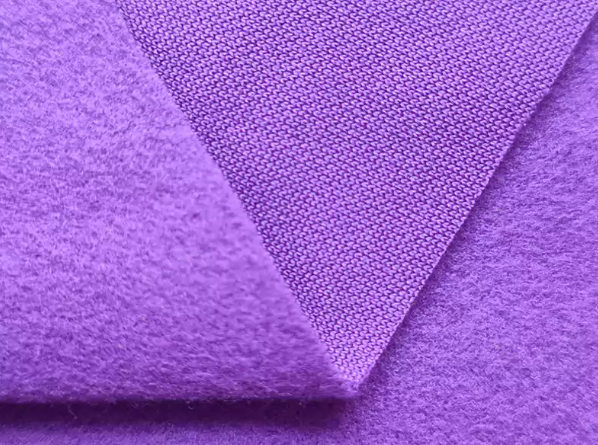
We understand that colors bring life to garments. That’s why we always keep a wide stock of 20 to 25 different shades of polyester fleece in our warehouse — ranging from traditional to modern and fashionable colors. You can choose any color based on your preference and needs. If you don’t find your desired color in our existing range, don’t worry! We also offer custom fabric production and dyeing services. Our expert dyeing team ensures that your chosen color is applied to the fabric with the best quality. We use premium quality dyes that are long-lasting and retain their vibrancy even after washing.
If you are purchasing garments made from polyester fleece or want to evaluate a specific quality, the following professional testing methods can help. These are used to check fabric quality, identify genuine polyester, recycled content, and overall finishing.
1 Feel & Touch Test
\High-Quality Polyester Fleece:
• Feels soft, smooth, and lightweight
• Returns to its original shape quickly when pressed or stretched
• Has a mild, matte finish instead of a shiny surface
Low-Quality Polyester Fleece:
• Feels rough, stiff, or overly shiny
• Forms wrinkles when pressed and doesn’t recover quickly
• Feels plasticky and cheap
1.2 Light Test (Checking Against Light)
Good Quality Fleece:
• Allows only a little light to pass through when held against a light source
Poor Quality Fleece:
• Is too thin and allows more light to pass through, indicating weak fabric structure
1.3 Burn Test – A Reliable Professional Method
The most effective way to test genuine polyester fleece:
• Burn a small piece of the polyester fleece
• If it smells like burning plastic and melts into a hard bead, it’s pure polyester
• If it turns to ash (like cotton or linen), it contains natural fibers
• If it becomes sticky and smells like burnt cotton, it may be recycled polyester.
1.4 Water Absorption Test
High-Quality Polyester Fleece:
• Retains water droplets on its surface for a longer time and doesn’t absorb quickly.
Low-Quality Polyester Fleece:
• Immediately absorbs water, which indicates poor finishing or that the fabric is not pure polyester.
Find the perfect fit for your apparel needs.


Insights, trends, and stories from the world of apparel manufacturing.

For a new or growing brand, committing to massive production runs can feel like a gamble:
High upfront costs drain your budget.
Risk of unsold stock hurts cash flow.
Limited creative flexibility means fewer design variations.
As a result, many promising brands either overextend financially or compromise on their vision just to meet a factory’s terms.
We believe innovation should never be stifled by outdated production models. Our low MOQ approach allows:
Design freedom — experiment with multiple styles, colors, and fabrics without financial strain.
Faster market testing — launch small batches, gather feedback, and refine designs before scaling up.
Lower risk — keep inventory lean while maintaining a steady flow of new products.
One of our recent clients, a startup activewear label, launched with just 50 pieces per design. Within weeks, they had sold out, reinvested profits, and scaled their orders without taking on debt — all while building a reputation for fresh, limited-run collections.
Flexible production: We accommodate orders as low as 25 pieces per design/color.
End-to-end support: From fabric sourcing to packaging.
Speed to market: Samples in 7–10 days, bulk orders in 3–4 weeks.
In a world where agility wins, low MOQs aren’t just a perk — they’re a competitive advantage.
At Ferrati, we make sure you have it.
Ready to bring your next collection to life without high MOQ headaches? Contact us today to start your first sample.

Identifying the appropriate sportswear producer is among the key processes when you want to expand your personal clothing company. A good partner can provide you with good support, beautiful work and smooth service. The country has a history of producing sportswear, and most global brands have confidence in Pakistan's ability to make bulk purchases. If you prefer collaborating with a trustworthy team, you will need to know what to look for. This blog will help you select the most appropriate sportswear manufacturer in Pakistan for your brand.
The first thing to test is experience. A firm that has a long duration in the business will know what brands require. They are familiar with small and big orders, and they have good ways of producing good sportswear. You are more comfortable when you decide to work with a manufacturer who has many years of experience. A highly experienced team will teach you the right direction and prevent the occurrence of the easy mistakes that new factories can commit.
The sportswear ought to be soft, powerful and durable. Ask the manufacturer to provide fabric samples before making the decision. This will aid you to check out the material using your own hands. Test the stretch, see the weight, and test whether it is smooth after washing. It is also important to do good stitching. Powerful seams assist the garments to remain in form during exercises. The look of the fabric and the stitching allows you to determine whether the company provides decent products.
There is a demand by many brands to have differentiated designs of their products. In case you desire that your stuff appears different, then you want an organization that can produce custom sportswear Pakistan products. Question the manufacturer on whether they can do custom cuts, colors, logos, prints and sizes. The brand image can be derived, with the assistance of a company having a good custom service. They pursue your thoughts and make them come true in a clear and direct manner.
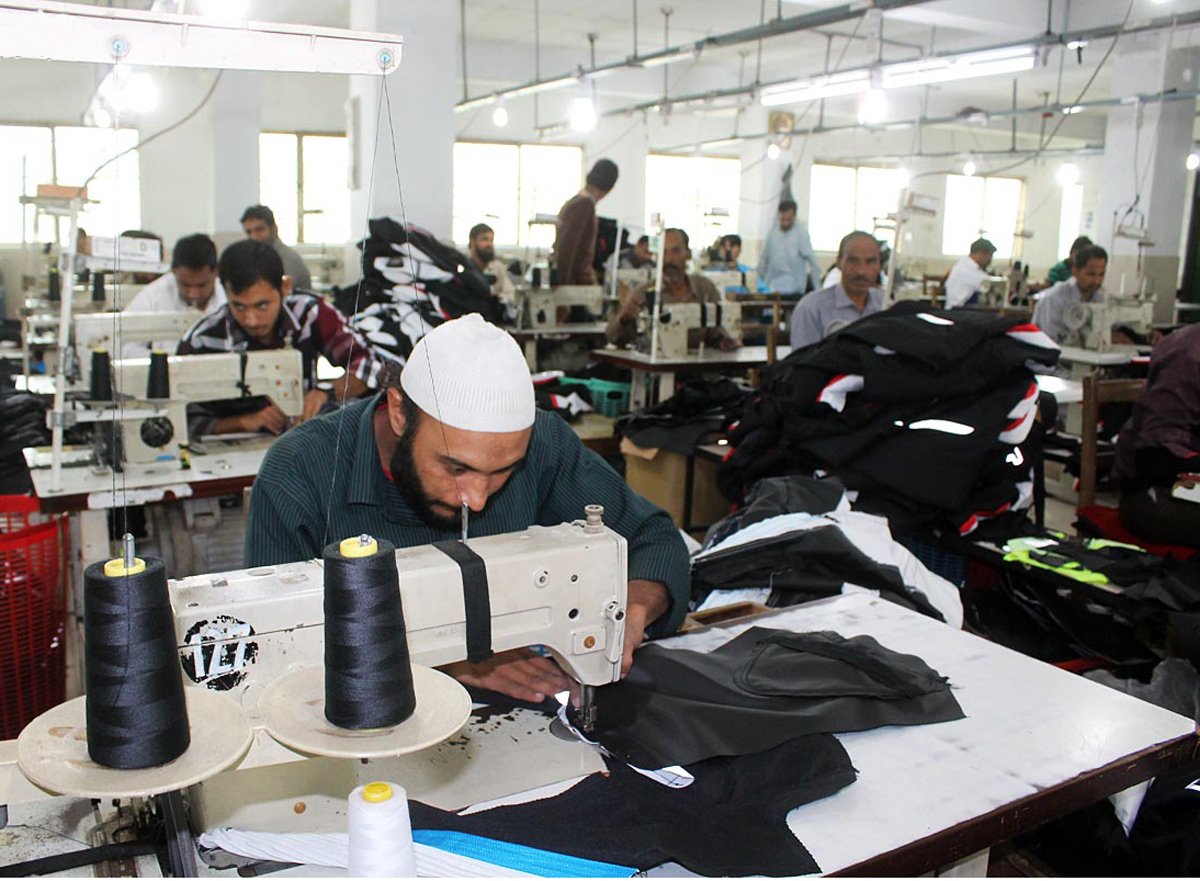
Enquire whether the manufacturer has the capability to deal with a large order of work before making the order. In case you are planning to expand your brand, you should have a partner that will be able to make high volumes without delays. A good wholesale sportswear manufacturer will have enough machines, staff, and daily output to manage bulk orders. The advantages of high production power by the company are that the supply chain remains uninterrupted and that the business experiences less order timing issues.
A trusted brand in sportswear will possess an existing work to demonstrate. Request pictures, samples or even the finished products of the past clients. This provides a clear understanding of their talents. It is also possible to check the list of the brands they have cooperated with. In case they have been serving familiar or international brands, it means they are familiar with concerning quality regulations. It could also be done through reviews of old clients to find out some behavior of the company as well as how they address issues.
Effective communication is time-saving and error-free. Select a manufacturer that responds promptly and who does not confuse when he needs to know something. It is more critical with the custom items that you work on. Clear talks make you feel safe and this is so particularly with large orders. Once both parties know one another, then the entire process will be characterized by ease and relaxation.
High speed and secure delivery is extremely crucial to any brand. The company will have to tell you when they are going to deliver the samples and bulk orders to you before you make your decision. Other questions to ask are the shipping methods. If your brand is based abroad, such as in the USA, you should work with a team that understands USA sportswear import rules. A proper sportswear supplier will inform you about documents, packing and even shipping time to make sure that your products arrive at the right time.
Price is one, though not the only factor. Low prices are usually associated with poor quality. Find a company that charges reasonable rates and quality. You will get the clear price information of a good sportswear supplier Pakistan such as the costs of fabric, stitching, and additional work such as printing or logo work. As soon as the pricing is transpired, you find it easy to budget every piece.
The samples assist in viewing the actual quality of the product. Irrespective of the bulk order, always demand a physical sample. That is why you can verify all aspects such as fabric, color, print, stitching, and fit. Anything that requires modification can be corrected at this point. A manufacturer will never refuse giving out samples since they will feel obligated to make you feel safe.
It is not a one-time selection of a sportswear manufacturer. You must find a partner that will develop with your brand. A trusted company is supportive, gives straightforward updates and transparent work. The partnership is strong when there is trust between both parties. This will ensure your brand remains constant, lower the expenditure and gives a smooth stream of success in the long-term.
The initial decision on the selection of the appropriate sportswear manufacturer in Pakistan might seem difficult at the time of making the decision, but once you are aware of what you need to be, it becomes simple. Make sure the experience, quality, custom work, and past results of the company. Ensure that they are communicative and ensure time delivery. Choosing the right partner will provide you with a powerful foundation of your brand. Your sportswear line is capable of expanding rapidly and expanding to a bigger market with the necessary support.

In today’s fashion market, speed is everything. Trends shift quickly, customer demand changes overnight, and brands that can’t adapt get left behind. But here’s the challenge: traditional manufacturing timelines often stretch for months, making it impossible to keep up.
At Ferrati, we’ve built our process to eliminate unnecessary delays — delivering up to 60% faster than the industry average without sacrificing craftsmanship.
Before we touch a single stitch, we sit down with you (virtually or in person) to understand:
Your design goals
Target market
Fabric and finish preferences
Budget and timeline
This ensures we’re not just manufacturing clothes — we’re building your brand’s identity.
Using advanced machinery and streamlined workflows, we create samples in 7–10 days.
This rapid prototyping means you can review, test, and approve designs quickly, avoiding long back-and-forth cycles.
Our production lines are built for flexibility, enabling:
Small-batch runs to test markets
Quick scaling once designs prove successful
Adaptive scheduling to meet urgent deadlines
Speed means nothing without quality. Every order passes through:
Fabric inspections
Stitch durability tests
Colorfastness checks
Final packaging reviews
This ensures your customers receive products that look and perform exactly as promised.
Our model is designed for today’s brands — agile, responsive, and customer-focused. By owning the entire manufacturing process from sourcing to delivery, we cut out delays caused by multiple intermediaries.
In short: With Ferrati, you can launch collections faster, capture trends while they’re hot, and keep your customers coming back for more — all without sacrificing quality.
CTA: Need your next collection ready in weeks, not months? Let’s make it happen — start your free consultation with Ferrati today.
Discover our premium materials tailored for your needs.

Cotton blend is a fabric made by combining pure cotton with other fibers (such as polyester, linen, Lycra, wool, or nylon). The purpose of this mixture is to enhance the fabric’s durability, softness, strength, and utility, enabling it to perform better in various seasons and needs.
The mixing of cotton first began in the early 20th century when manufacturers started combining its natural fibers with different materials. The most important phase in the history of cotton blend came in the 1940s and 1950s, when modern technology and new methods of fiber production made it possible. During this time, various types of fibers such as polyester, nylon, wool, and other synthetic fibers were mixed with cotton to increase its durability, elasticity, and water resistance. The primary goal was to combine the natural softness and comfort of cotton with the strength and resistance of synthetic fibers. The use of cotton blend began in the fashion and work industries, and it is now found in various types of clothing, such as T-shirts, jeans, hoodies, sweatshirts, tracksuits, sweatpants, jackets, shorts, trousers, women’s crop tops, etc., and other everyday wear.
Cotton blend is extremely popular in the fashion and textile industry due to its unique characteristics. Its prominent characteristics are as follows:
• It is soft like pure cotton but more durable.
• The blended fibers in cotton blend make the fabric capable of long-term use, so it does not deteriorate quickly.
• Air circulation is easily possible through the cotton fibers, so there is less sweat on the skin.
• Adding polyester or other synthetic fibers reduces shrinkage after washing.
• Due to fewer wrinkles, most cotton blends require less ironing.
• Additionally, when blended with spandex or elastane, this fabric becomes more elastic.
(Cotton-Polyester), (Cotton-Nylon), (Cotton-Rayon), (Cotton-Spandex), (Cotton-Wool), (Cotton Lycra)
• This fabric deteriorates less quickly than pure cotton, especially polyester blends.
• Pure cotton absorbs more water, while cotton blend dries more quickly in comparison.
• It is less wrinkled than pure cotton and easier to care for.
• It can be made for use in every season by combining different fibers.
• Cotton blend is often available at a lower price than pure cotton or pure wool.
• Although it contains cotton, the mixture of synthetic fibers reduces the natural feel.
• Pure cotton absorbs more sweat, while blended fabrics absorb less.
• Some cotton blended fabrics are at risk of damage in high temperatures.
• Adding synthetic fibers reduces biodegradability and natural decomposition.
• Some people may be allergic to synthetic fibers, which causes itching or irritation on the skin.
• Washing: Generally, it is better to wash cotton blend in lukewarm or cold water.
• The blend of polyester and nylon makes this fabric dry quickly, which provides convenience in daily use.
• Use detergents specifically for soft clothes to protect the fibers.
• Dry immediately after washing to prevent the fabric from shrinking.
• It is best to dry it in natural air. Keeping cotton blend clothes in the sun for too long can fade the color.
• Ironing: It is beneficial to iron this fabric on low heat.
• Ironing at high temperatures can damage the fibers.
• China: The world’s largest textile industry, where cotton and its blends are produced on a large scale.
• India: Holds a prominent position in the production of cotton and cotton blend fabrics.
• Pakistan: A major exporter of cotton blend in the global textile market.
• Bangladesh: Produces cotton blend on a large scale for the ready-made garments industry.
• America: Specializes in producing high-quality cotton and its blends, particularly in Texas and California.
At Ferrati Sports, we specialize in producing impeccable garments with unbeatable quality by combining the latest technology and creative designs, using the finest type of cotton blend fabric. These include hoodies, sweatshirts, tracksuits, sweatpants, jackets, trousers, etc. We provide our customers with quality and durable clothing by using cotton blend fabric in our products. Our designs are in line with modern fashion. They are comfortable as well as stylish. Our company’s goal is always to produce the best products and meet customer expectations. We offer our customers minimum order quantity (Low MOQ), competitive prices, fast production process, and quick shipping. It is important for us to understand and meet the unique needs of every brand. That’s why we provide you with transparent pricing, the fastest turnaround time, and prompt delivery of your products. We are partners in your business’s success, and we do all this with the best quality and service so that your brand is always one step ahead. Our mission is to provide customers with fabric that is not only high-quality but also durable for long-term use. If you want to purchase high-quality hoodies, sweatshirts, tracksuits, or other cotton blend material products, experience your next order with Ascension International now.

Softshell is a synthetic fabric generally made from a blend of polyester, spandex, or nylon. It is lightweight, flexible, and breathable. The inner layer is typically soft and warm (often fleece), while the outer layer’s surface is designed to resist water and wind. This fabric is essentially the opposite of hardshell fabric. While hardshell is fully waterproof and windproof, it tends to be stiffer and less comfortable. The main feature of softshell fleece fabric is that, despite being lightweight, it allows the body to move freely and helps regulate body temperature. It is commonly used in outdoor activities, sports, and everyday clothing, especially jackets and pants. Rather than for harsh cold or rain, it is an ideal choice for mild weather conditions.
Softshell fabric is considered one of the modern technical fabrics that has completely transformed the concept of traditional outdoor clothing. Its history began in the late 1990s when the well-known company Polartec first introduced it. At that time, hardshell fabrics were used to protect against severe weather. Although waterproof, that fabric was very rigid, heavy, and uncomfortable. Polartec began working on a material that would not only protect against rain and wind but also not restrict physical movement. That was the moment softshell fabric came into being a material that is water repellent, wind resistant, lightweight, and also capable of wicking moisture away from the body.
Softshell fabric typically consists of two or three layers, such as:
1. Outer Layer: Made from flexible polyester or nylon, this layer is treated with a special Durable Water Repellent (DWR) coating. This prevents light rain or snow from penetrating
the fabric by causing water droplets to bead up on this surface. In some three-layer softshell fabrics, a thin membrane (optional middle layer) is applied, which helps block the wind
while allowing sweat to escape.
2. Inner Layer: The inner layer is usually made of a soft, brushed polyester or fleece, which helps retain heat and provides a soft feel to the body. That’s why products like softshell
pants, software jackets and softshell gloves offer a combination of comfort, protection, and durability.
1. Weather Resistance: The outer surface of softshell fabric is treated with a special coating called Durable Water Repellent (DWR), which prevents water from being absorbed. It is capable of resisting light rain, snow, and wind. Although softshell fabric is not completely waterproof, it is water-resistant, which makes it ideal for jackets, outdoor wear, hiking trousers, and cycling gear. Hence, it is suitable for light rain or drizzle.
2. Breathability: A major drawback of traditional hardshell fabrics was that they did not allow sweat to escape. However, softshell fabric is engineered in such a way that it allows moisture from the body to escape, keeping your body temperature moderate and dry. Wearing it makes the body feel warm and dry. This feature makes softshell jackets and sportswear for gym use highly preferred.
3. Mobility and Flexibility: Softshell fabric has a natural stretch, making it ideal for sports, exercise, and outdoor activities. Softshell fabric is generally made from stretch nylon or polyester in a 2-way or 4-way stretch, which makes it extremely flexible. This fabric adjusts with the movement of the body making it ideal for dynamic activities like rock climbing, trekking, cycling, and skiing.
4. Comfortable and Soft feel: The inner layer of softshell fabric is usually made of brushed polyester or microfleece, which feels very soft, warm, and comfortable on the skin. This feature also makes it popular for ladies softshell jackets, baby softshell suits, and casual wear.
5. Thermal Insulation: Softshell fabric provides a certain level of thermal protection, especially when the inner lining contains fleece. While it is not enough for extreme cold, it can keep you warm in mild to moderately cold weather. The fleece inner layer provides slight warmth, which is beneficial in chilly conditions.
6. Lightweight and Packable: This fabric is much lighter than heavy jackets or coats, making movement easier. It can be easily folded and packed into a small bag, which makes it a favorite choice for travelers and adventurers.
7. Durability: The fabric is usually abrasion-resistant, meaning it doesn’t tear or wear out easily. That’s why softshell is commonly used in military wear, workwear softshell jackets, and outdoor uniforms.
8. Modern Look: Softshell fabric also offers a stylish and modern appearance. Trendy and Elegant Jackets and pants made from slim-fit softshell fabric are not only functional but also visually stylish. That’s why today, the use of softshell is no longer limited to urban fashion—it has also found its place in sportswear and adventure wear.
9. The Rise in Popularity of Softshell Fabric: Thanks to its outstanding properties, softshell fabric is now extremely popular for softshell jackets, softshell trousers for hiking, and corporate outerwear. Initially, this fabric was used specifically for men’s and ladies’ softshell jackets, but its demand grew rapidly and it began to be included in garments such as softshell vests and softshell hiking trousers. It not only offers both fashion and function in one, but is also a material that fulfills all the needs of a modern consumer. The main reason behind the global popularity of softshell fabric is its unique multi functional features: comfort, protection, breathability, and flexibility—all in one. Today, it is the preferred choice for custom outdoor softshell jackets, especially for those who go on mountain adventures, travel in snowy or cold and dry regions.
10. A Wide range of Colors: We understand that colors bring life to your clothing. That’s why we maintain a wide stock of 15 to 20 different colors of softshell fabric in our warehouse at all times. These include traditional shades as well as modern and fashionable hues. You can choose any color that suits your preference and need. If you do not find your desired color in our current range, don’t worry—we also offer the facility to custom-make and dye fabric according to your specifications. Our expert dyeing team uses only high-quality dyes that are durable and retain their brightness even after washing, ensuring top-tier results on your chosen fabric.
Washing Instructions: Wash the fabric with lukewarm water and a mild detergent. Avoid using harsh chemicals, as they can damage the fibers of the fabric. Unlike hard shell garments, softshell is easier to wash. However, if not cared for properly, its waterproofing capability can gradually diminish over time.
Drying Instructions: After washing, let the fabric air-dry naturally or use a dryer at a low temperature. Excessive heat can damage the waterproof coating of the fabric. Therefore, do not iron softshell fabric. If, for any reason, the waterproofing is affected, use a waterproof spray or special detergent from time to time to restore the fabric’s water-repellent properties.
China: China is the world’s largest producer of softshell fabric. It leads globally in both the production and export of softshell. The coastal regions of China are particularly known as production hubs.
UnitedStates: The U.S. ranks second in softshell production, especially in southeastern states like Florida and Louisiana. U.S. exports play a significant role in the global softshell market.
Bangladesh: Bangladesh produces high-quality softshell at low cost. The country is well-known in the international market, especially for exports.
Vietnam: Vietnam specializes in producing technical outdoor fabrics, which are selected by international brands for performance wear.
Turkey: Turkey produces premium-quality softshell fabric, mainly for high-end fashion and sportswear.
India: India’s textile industry is rapidly growing, and it has become a major producer of softshell fabric. Production is mostly concentrated in coastal areas like Tamil Nadu and Kerala. India exports softshell to South Asia and Eastern countries.

Polar Fleece is an evolutionary fabric first developed in the 1980s by the famous American textile company. The purpose of this invention was to create an alternative fabric that was soft, warm, and comfortable like wool but also cheaper, lighter, and quick-drying. It is lightweight and relatively smooth in structure. This is why it is used in winter as clothing, jackets, blankets, and outdoor wear. Furthermore, regarding its structure, it is such that it retains body heat and also dries moisture quickly. This fabric does not occur naturally but is made from synthetic fibers, primarily consisting of polyester. It gained such popularity in the world that within a few years, it became the most used fabric in hospitality wear, sportswear, and everyday warm clothing. It is also interesting that the company that created polar fleece kept the basic formula rights open so that textile manufacturing around the world could produce it for the general public.
The special feature of polar fleece is its upper surface, which is made very soft, warm, and thick with fluff by special machines. When you touch polar fleece, it feels as if small, soft threads or fluff are coming out of the fabric. These are thick and round tuft-like fluffs that are part of the fabric, but they are raised upwards with the help of machines. This structure provides the fabric with softness, warmth, and a comfortable feel.
1. This fabric is lighter and much softer than wool.
2. Its natural structure provides warmth to the body and protects against the cold. Therefore,
this fabric is excellent for the winter season.
3. Polar fleece is water-resistant and dries quickly.
4. Air can easily pass through the fabric. This prevents perspiration and keeps it comfortable
to wear. Polar fleece is machine washable and dries quickly.
5. This fabric does not shrink and does not wrinkle.
6. High-quality polar fleece generally can resist pilling.
1. Polar Fleece is as warm as wool but much lighter in weight.
2. This fabric lasts longer than other wool or cotton and does not deteriorate easily.
3. Polar fleece is cheaper than natural wool and other warm fabrics.
4. This fabric does not require any special care in washing and drying.
5. It is made from synthetic materials, so it is an alternative to animal-derived wool.
1. Risk of catching fire: This is a synthetic fabric. Therefore, it can catch fire more easily than wool. Avoid working near fire while wearing it.
2. Static Charge: Dust or hair can stick to polar fleece. This can increase the chances of static charge.
3. Environmental Damage: Since it is made of polyester, it can contribute to plastic waste.
4. Piling: Cheap polar fleece starts to shed lint after some use.
• Fabric Washing: Wash polar fleece with a mild detergent in normal or cold water. Using too much hot water is harmful.
• Spin or High Heat: Do not use very hot water or a high spin cycle, otherwise, the fabric may be damaged.
• Dry Flat: Dry the fabric straight instead of squeezing it to maintain its softness.
• Do not Iron: This fabric does not need ironing because it is wrinkle-free.
• Prevent Piling: If lint starts to form, use a fabric shaver or anti-pilling wash.
We understand that colors add life to your clothes. That’s why Ferrati Sports International Company keeps a stock of 15 to 18 different colors of polar fleece in its warehouse at all times. Which includes traditional colors as well as modern and fashionable colors. You can choose any color according to your preference and need.